2028 BMW iX Release Date, Price, Specs
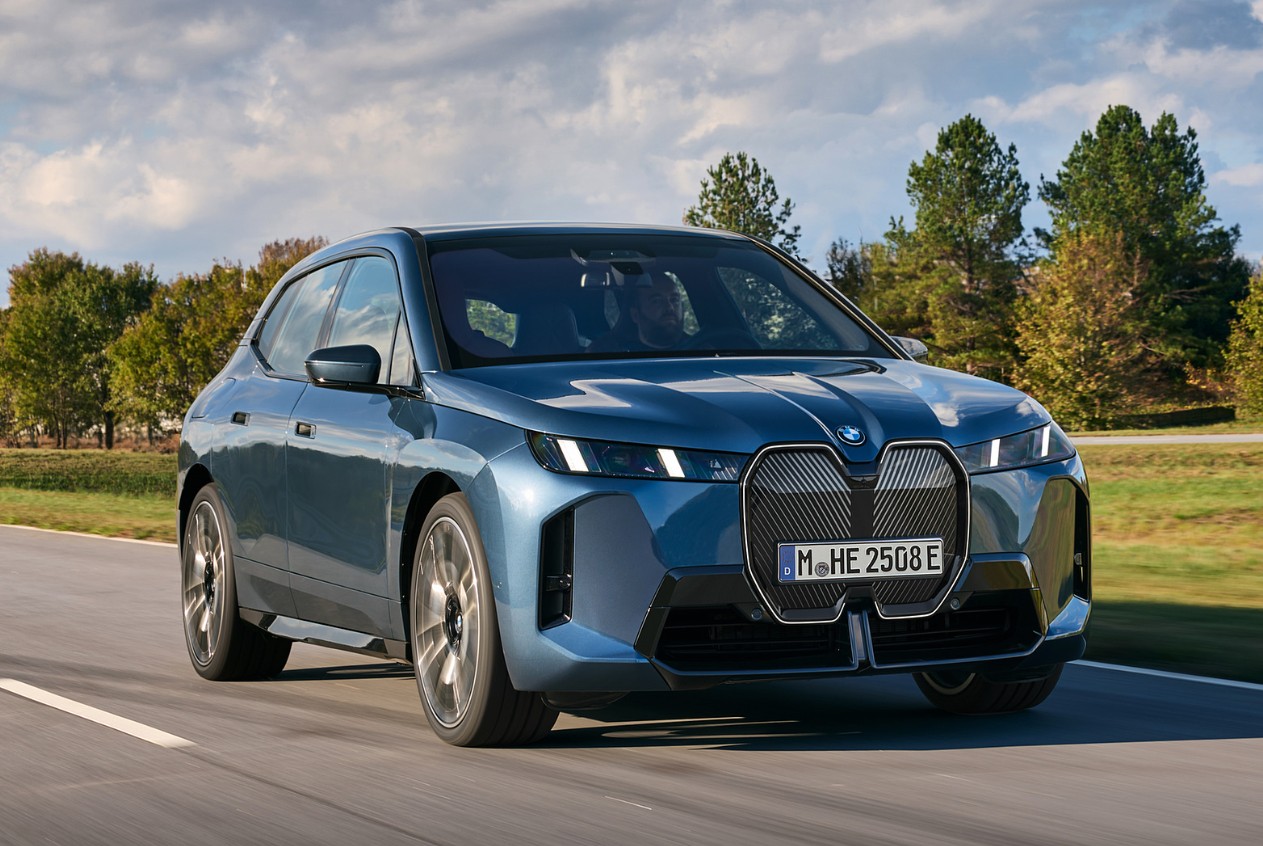
2028 BMW iX Release Date, Price, Specs – The 2028 BMW iX could represent one of the most important stages in BMW’s electric-SUV evolution. The current iX already occupies a distinctive position in BMW’s lineup because it was designed from the beginning as a fully electric Sports Activity Vehicle rather than adapted from an internal-combustion platform. The latest 2026 model demonstrates how far the original concept has evolved, with the iX xDrive45 producing 402 horsepower, the xDrive60 delivering 536 horsepower, and the performance-focused iX M70 xDrive reaching up to 650 horsepower. Depending on configuration, the current model offers an estimated EPA range of up to 312 miles for the xDrive45, 340 miles for the xDrive60, and 302 miles for the M70.
The bigger story for 2028 is BMW’s Neue Klasse technology program. BMW has stated that the new iX3 is the first series-production Neue Klasse vehicle and that the technology introduced there will be rolled across the broader BMW portfolio. The company says more than 40 new or updated models are scheduled to incorporate Neue Klasse technologies by 2027. That makes it highly likely that an iX produced or substantially updated around the 2028 timeframe would benefit from the architecture, software, electrical systems, battery technology, and digital concepts introduced through this program. However, BMW has not officially confirmed the final specifications, nameplate strategy, pricing, or release date of a specific 2028 BMW iX.
The potential significance of a 2028 iX comes from the fact that BMW is moving beyond simply installing larger batteries into existing electric vehicles. Neue Klasse introduces an entirely different approach to electric propulsion, electronics, software and user interaction. BMW describes its next-generation electric technology around an 800-volt Gen6 system, new cylindrical battery cells, high-speed charging, more centralized computing, and the so-called Heart of Joy control unit for drivetrain and driving dynamics. The first Neue Klasse iX3 is already demonstrating this direction, including an advertised range of up to 800 km WLTP and charging capability of up to 400 kW.
That puts the 2028 BMW iX in an interesting position. It may not simply be another annual refresh with a new bumper and additional software. Instead, a future iX could combine the spacious, premium character of today’s model with the much newer technology architecture BMW is introducing across its next generation. For buyers considering a luxury electric SUV from BMW, Mercedes-Benz, Audi, Porsche or other premium manufacturers, the most important improvements could therefore be found underneath the body and inside the cabin rather than in a dramatic change to the basic SUV concept. 2028 BMW iX Release Date
2028 BMW iX Redesign and Update Plan
Exterior & Interior
The exterior of the 2028 BMW iX could represent a careful transition between the distinctive shape of today’s model and BMW’s new Neue Klasse design language. The current iX already uses a monolithic body, flush surfaces and a highly aerodynamic profile, while its 2026 update introduced a revised kidney grille, redesigned headlights, new bumpers and additional wheel designs. BMW also introduced an optional M Sport Package and more aggressively styled M-specific equipment. A future model could retain the iX’s recognizable silhouette while adopting slimmer lighting elements, cleaner body surfaces and more precisely integrated aerodynamic features.
The front end is likely to become especially important. BMW’s Neue Klasse design uses a new interpretation of the kidney grille and lighting, creating a more digitally recognizable front face. On the iX, the grille does not need to provide cooling for a traditional combustion engine, giving designers considerable freedom. The future version could therefore use an illuminated or digitally expressive grille treatment integrated with the headlights, while active aerodynamic components manage airflow around the body. BMW could also use a smoother lower fascia, flush door handles, optimized mirrors and aerodynamic wheels to reduce drag. Every small reduction in aerodynamic resistance matters for an electric SUV because highway efficiency directly influences real-world range.
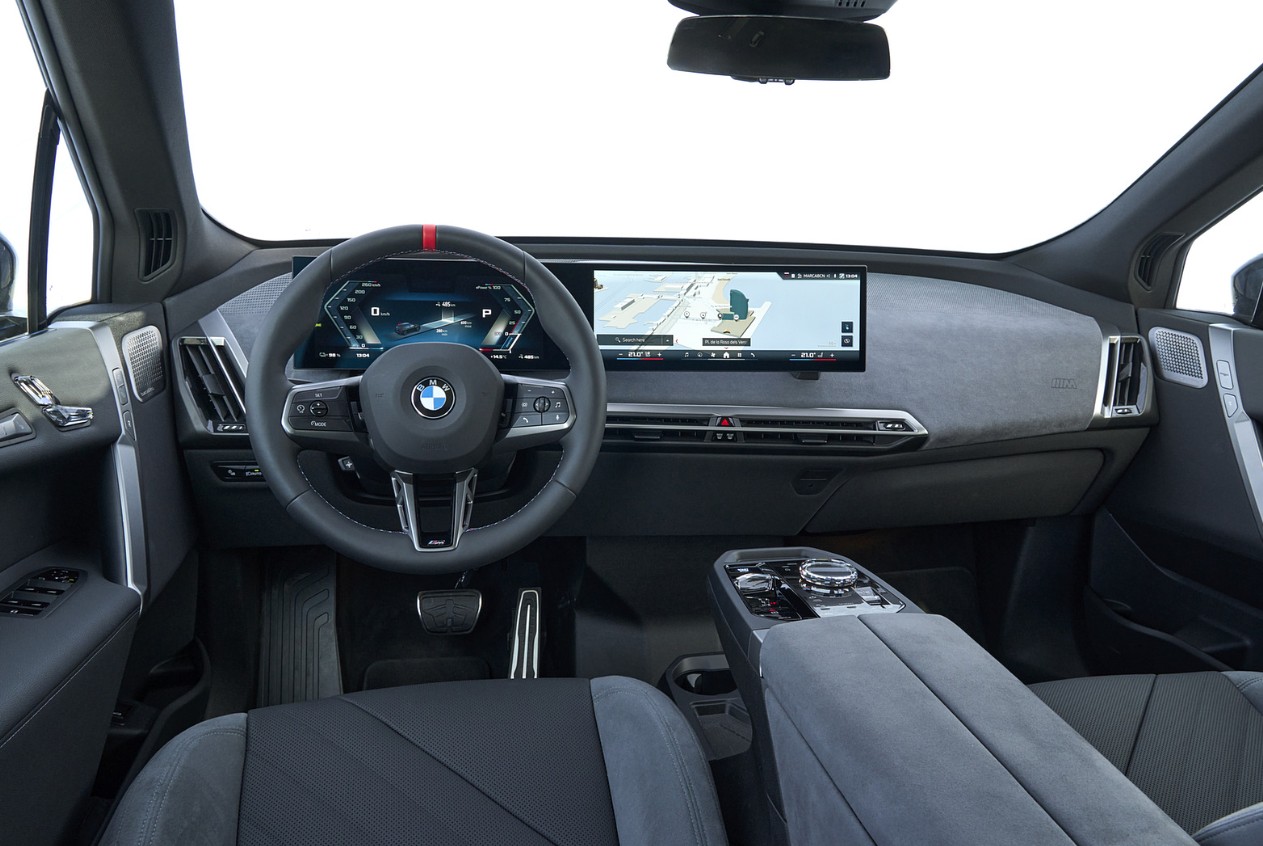
Inside, the transformation could be much more dramatic. The current iX already has a minimalist cabin, a curved display arrangement, high-quality materials and an unusually spacious atmosphere. The next-generation BMW Panoramic iDrive takes that philosophy much further. BMW’s new system projects key information across the lower portion of the windshield and combines it with a central touchscreen and optional passenger-oriented information. The new 7 Series already demonstrates how Neue Klasse technology can move into BMW’s luxury range, including BMW Panoramic iDrive, Panoramic Vision and an optional passenger screen. A future iX could use these concepts to create a cabin that feels more like an intelligent digital environment than a conventional dashboard.
Luxury should remain an important part of the iX experience. BMW could offer sustainable upholstery, natural materials, premium metal or wood trim, customizable ambient lighting and upgraded acoustic insulation. The current iX already offers options such as the Sky Lounge panoramic glass roof, Heat Comfort Package and Bowers & Wilkins Diamond Surround Sound System with 30 speakers and front-seat exciters. A 2028 model could take those features further with improved seat ventilation and massage functions, enhanced climate management and more sophisticated personalization. The objective would not simply be to add more equipment, but to create a quieter and more relaxing environment that makes long-distance electric travel feel effortless.
A major redesign for the 2028 BMW iX would make sense because BMW is transitioning its electric portfolio toward Neue Klasse technology. The company has already confirmed that the first production Neue Klasse model is the new iX3, followed by the i3, with the technology then spreading across the wider range. BMW describes the new generation as a fundamental change involving electric drive systems, battery technology, display and control concepts, software, electronics, manufacturing and design. Consequently, a 2028 iX could adopt a much more integrated architecture than today’s vehicle, even if BMW retains familiar iX proportions and positioning.
The biggest structural change could involve the electrical system. BMW’s Neue Klasse uses a new zonal electrical architecture and four high-performance computing units, which BMW describes as “superbrains” handling areas such as infotainment, automated driving, driving dynamics and basic vehicle functions. The company says this approach provides more than 20 times the in-car computing power of the previous electronic architecture while reducing the number of individual control units. For a future iX, that could translate into faster software, more sophisticated driver assistance, better energy management and the ability to introduce new functions through over-the-air updates long after the vehicle leaves the dealership.
Battery technology should also be central to the redesign. The current iX already benefits from upgraded battery technology and silicon-carbide inverter technology, but Neue Klasse takes another major step forward. BMW’s Gen6 system uses cylindrical battery cells with approximately 20 percent higher energy density than the previous generation, while the company says the new iX3 can achieve up to 800 km WLTP. BMW also reports charging at up to 400 kW and the ability to recover more than 350 km of WLTP range in approximately 10 minutes under suitable conditions. A future iX using related technology could therefore prioritize both range and charging speed rather than relying exclusively on an enormous battery.
The redesign should also improve efficiency through software and mechanical integration. BMW’s Neue Klasse drivetrain combines different electric motor technologies and a new power-electronics approach designed to reduce energy losses, weight and manufacturing complexity. The company says the upgraded drivetrain concept can reduce energy loss by 40 percent and weight by 10 percent compared with the previous approach. Applying those improvements to a large premium SUV could have significant consequences. A lighter and more efficient iX would not only travel farther on the same amount of stored energy but could also deliver sharper acceleration, better braking response, improved handling and less energy consumption at highway speeds. 2028 BMW iX Release Date
2028 BMW iX Specs
Engine & Performance
Powertrain development could be the strongest reason to consider the 2028 BMW iX. The current model already provides serious performance, with the 2026 iX xDrive45 producing 402 horsepower and accelerating from 0 to 60 mph in 4.9 seconds, while the xDrive60 generates 536 horsepower and reaches 60 mph in 4.4 seconds. The M70 takes performance considerably further, producing up to 650 horsepower and 811 lb-ft of torque with Launch Control, enabling a 0-to-60-mph time of 3.6 seconds. A future model does not necessarily need dramatically higher output; greater efficiency, lower weight and more consistent power delivery could be more valuable.
The drivetrain is expected to remain centered around electric all-wheel drive for higher-performance iX versions. The current iX uses an electric motor at both the front and rear axles, allowing the vehicle to continuously manage torque distribution without a conventional mechanical driveshaft. Neue Klasse technology could make that control considerably more sophisticated. BMW’s Heart of Joy is designed to coordinate drivetrain and driving dynamics functions at extremely high speed, potentially allowing future iX models to respond more precisely to steering inputs, traction changes, regenerative-braking demands and acceleration requests. The result could be an SUV that feels lighter and more agile than its physical dimensions suggest.
Range is likely to become another headline feature. The current 2026 iX xDrive45 has an estimated EPA range of up to 312 miles, while BMW lists up to 340 miles for the xDrive60 and 302 miles for the M70 under its preliminary EPA-based estimates. European WLTP figures can be substantially higher, with BMW reporting up to 701 kilometers for the latest iX xDrive60 in certain configurations. A future iX incorporating Gen6 battery technology could potentially move well beyond the current EPA range, although BMW has not announced an official 2028 iX range figure. The most important improvement may be achieving longer range without dramatically increasing battery size or vehicle weight.
Charging speed could be just as important as range. Today’s iX xDrive45 supports DC charging up to 175 kW, while the xDrive60 and M70 support up to 195 kW. BMW’s Neue Klasse iX3, by comparison, introduces an 800-volt electrical architecture capable of charging at up to 400 kW under suitable conditions. The company says more than 350 km of WLTP range can be added in approximately 10 minutes. A future iX using related technology could therefore make long-distance travel much easier, especially when paired with BMW Maps’ charging-optimized route planning. The exact charging specification for a 2028 iX remains unconfirmed, but the technology direction is unmistakable.
2028 BMW iX Fuel Economy
Efficiency should remain a priority even though the iX is positioned as a performance-oriented luxury SUV. The latest model already demonstrates BMW’s focus on efficiency, including silicon-carbide inverter technology, optimized wheel bearings, lower-friction components and low-rolling-resistance tires. BMW reports that the updated iX achieved improved energy efficiency alongside greater performance. Official 2026 WLTP figures list approximately 20.9 kWh/100 km for the xDrive45 and 21.0 kWh/100 km for the xDrive60, although real-world consumption varies with speed, temperature, wheels, tires and driving conditions. A 2028 model could lower those figures through improved battery cells, motors, software and aerodynamics. 2028 BMW iX Release Date
2028 BMW iX Safety Features
Safety technology could become significantly more sophisticated in the 2028 BMW iX as Neue Klasse introduces a new electronic architecture specifically designed to support advanced driver assistance. BMW says its new electrical system centralizes computing for functions including automated driving, while the technology architecture is designed to accommodate future software and AI features. For the iX, this could mean more accurate lane recognition, better object detection, smoother adaptive cruise operation and more capable highway assistance. The exact capabilities will depend on local regulations and the hardware installed in each market, but the computational foundation should be considerably stronger than in earlier BMW EVs.
The future iX could also improve active safety around intersections and urban environments. High-resolution cameras, radar and potentially additional sensors could help the vehicle identify pedestrians, cyclists, vehicles and road boundaries with greater accuracy. Automatic emergency braking could become more capable at higher speeds, while blind-spot intervention and lane-change assistance could operate more smoothly. Advanced parking assistance would also be valuable for a large luxury SUV. A high-definition surround-view system combined with automated parking could reduce the stress of maneuvering the iX in tight garages and crowded urban areas.
2028 BMW iX Release Date & Price
The trim structure could continue to revolve around standard xDrive versions and a high-performance M model. The current U.S. range starts with the xDrive45 at $75,150 before the $1,175 destination and handling charge, followed by the xDrive60 at $88,500 and the M70 xDrive at $111,500 based on BMW’s announced pricing for the updated model. A future 2028 iX could command higher prices if it receives a more advanced battery, 800-volt charging system, expanded autonomous-driving hardware and the latest BMW digital architecture. A realistic projection would place a base model around the low-$80,000 range, a long-range xDrive60-type version around $95,000–$105,000, and a flagship M version comfortably above $115,000. These figures are projections, not announced BMW pricing.
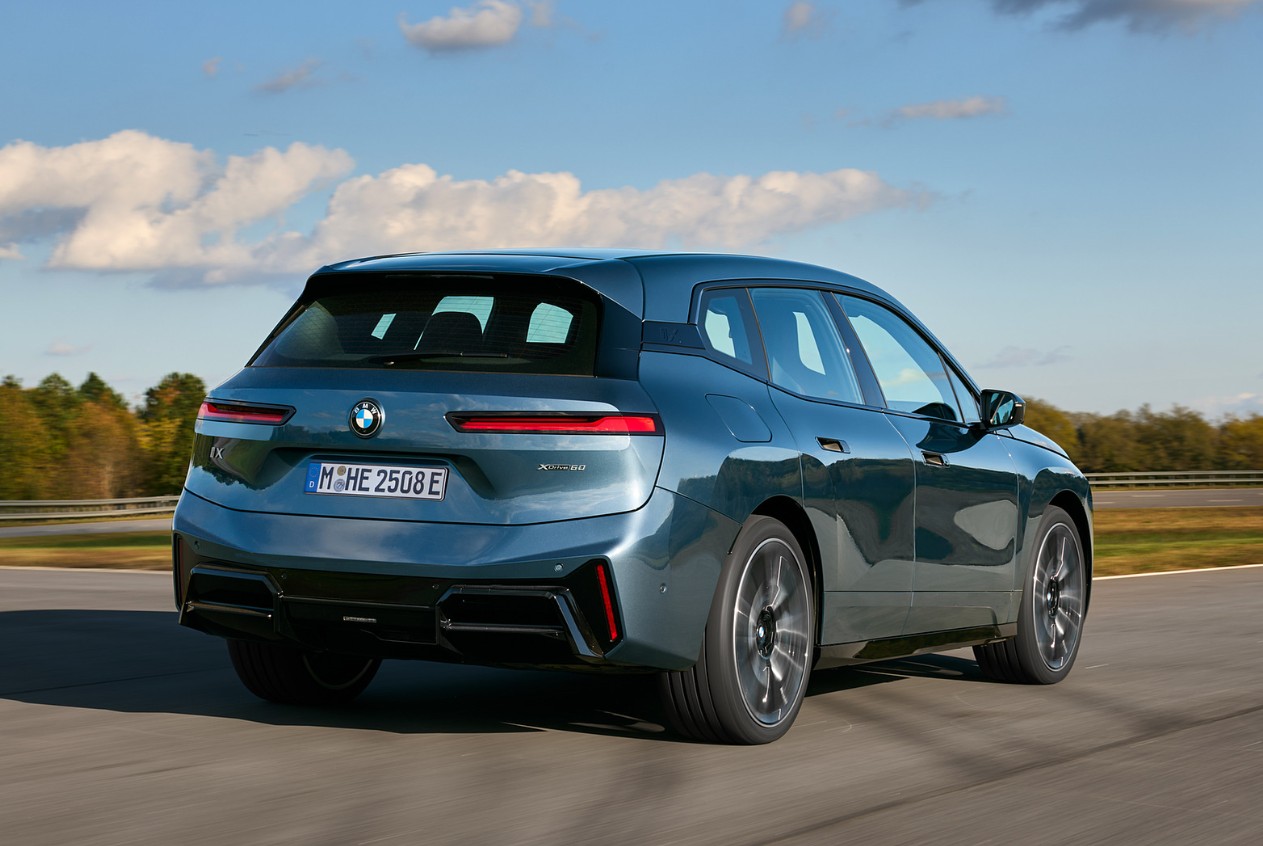
The 2028 BMW iX release date remains unconfirmed. BMW has not announced a specific production schedule or final configuration for a vehicle officially identified as the 2028 iX. The timing will depend on how BMW applies Neue Klasse technology to the existing iX product cycle. Since BMW says the new technology clusters will spread across its portfolio through 2027 and beyond, a 2028 iX is likely to benefit from that transformation in some form. A new-generation vehicle could arrive during the 2027–2028 period, while an evolutionary model could appear on a different schedule depending on production planning. Until BMW issues a formal announcement, the model year, launch timing and final specifications should be considered projections rather than confirmed facts.
Conclusion
The 2028 BMW iX could arrive at exactly the right moment for BMW’s electric strategy. The current iX has already established itself as a powerful, spacious and technologically ambitious luxury EV, but the arrival of Neue Klasse technology changes the competitive landscape. BMW is no longer simply refining an existing electric drivetrain. The company is introducing new battery cells, 800-volt charging technology, centralized computing, new software architecture, Panoramic iDrive and a different approach to controlling vehicle dynamics.
For buyers, the most meaningful improvement may be the combination of range and charging speed. A luxury SUV capable of traveling significantly farther while replenishing hundreds of kilometers of range during a short charging stop would eliminate one of the biggest practical concerns associated with long-distance EV ownership. At the same time, better energy efficiency could reduce operating costs without requiring an oversized battery.
The driving experience should remain another major advantage. BMW’s current iX already provides impressive acceleration, while the M70 demonstrates that a large electric SUV can deliver sports-car levels of performance. Neue Klasse technology could make the future vehicle more responsive and efficient at the same time, with more precise torque control and closer integration between propulsion, braking and chassis systems.
The 2028 BMW iX is not yet a fully confirmed production specification, so projected prices, range figures, trim names and release timing should not be confused with official BMW information. What is clear is that BMW is accelerating its transition toward a new electric and digital vehicle generation. If the iX receives the full benefit of that transformation, the 2028 model could become a substantially more capable luxury EV, combining long-distance range, ultra-fast charging, advanced software, premium comfort and genuinely engaging performance in a single package.
